
Company Name or Trademark: What’s the Difference?
A registered company name doesn’t protect your brand. What each one protects, how long, and why you need both. Trademarks US$350 per class.
Short answer
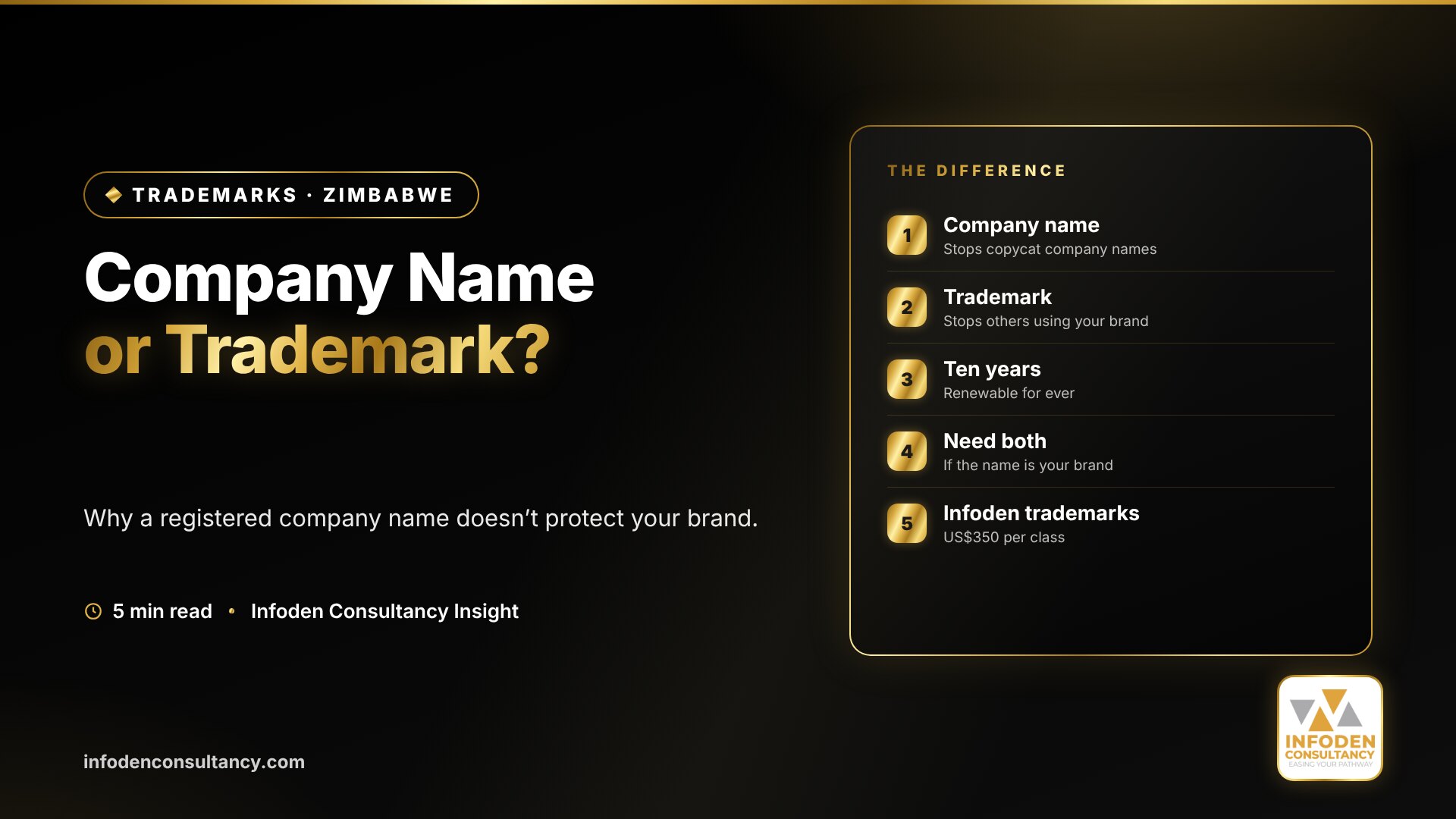
A company name, registered under the COBE Act, only stops another company or PBC registering the same or a confusingly similar name. A trademark, registered under the Trade Marks Act, gives you the exclusive right to use your brand for your goods or services, for ten years at a time. To protect a brand, you need both. Infoden registers trademarks for US$350 per class.
“My company is registered, so the name is mine.” It is one of the most expensive beliefs in Zimbabwean business. The company name and the brand are protected by two different laws, and the first one does far less than people think.
| Company name | Trademark | |
|---|---|---|
| Law | Companies and Other Business Entities Act [Chapter 24:31] | Trade Marks Act [Chapter 26:04] |
| Registered with | CIPZ (companies register) | CIPZ (trademarks register) |
| What it stops | Another company or PBC registering an identical or confusingly similar name | Anyone using the same or a similar mark for the same kind of goods or services |
| Covers | The legal name only | The word, the logo, or both, in the classes you choose |
| Lasts | As long as the company exists | Ten years from filing, renewable every ten years |
| Infoden price | Name search US$10; registration from US$120 | US$350 per class, all fees included |
What does a registered company name protect?
Very little beyond the register itself. Under section 25 of the COBE Act, the Registrar refuses a new company or PBC name that is identical to yours or so similar it is likely to deceive. That is it.
It does not stop:
- a sole trader or partnership using your name as a brand;
- a company with a different legal name selling products under your brand;
- someone registering your brand as a trademark first, and then objecting to you using it.
What does a trademark protect?
A registered trademark gives you the exclusive right to use the mark for the goods or services in the classes you registered. You can stop others using the same or a confusingly similar mark in those classes, and the registration is an asset you can license, sell or show investors.
Protection lasts ten years from the filing date and can be renewed every ten years, with no limit.
Example: two businesses, one name
Chipo registers “Mhandara Foods (Pvt) Ltd” and starts selling peanut butter under the “Mhandara” brand. Two years later a bigger competitor launches “Mhandara” snacks, and has registered “Mhandara” as a trademark for foods.
Chipo’s company name is still valid. But the competitor owns the brand for foods and can challenge the use of “Mhandara” on Chipo’s jars. A US$350 trademark filing at the start would have put Chipo first in line.
Do I need both?
If the name is also your brand, yes.
- The company name is how the business exists in law: contracts, bank accounts, tax and tenders.
- The trademark is how you own what customers recognise: the name on your products, shopfront, website and adverts.
Many businesses trade under a brand that is different from the legal name, for example “Glow Salon” run by “Mutasa Beauty (Pvt) Ltd”. In that case it is the brand that needs the trademark.
How does Infoden protect both?
- We search the company name with CIPZ and register the company (US$120, all fees included).
- We search the trademark register for the same or similar marks in your classes.
- We choose the classes with you: only the ones you trade in, because each class is a separate application.
- We file the trademark in the right owner’s name, with a clean copy of the logo if you have one, and follow it through to the certificate.
Common mistakes
- Assuming the company certificate protects the brand. It protects only the legal name on the register.
- Registering the trademark in the wrong name. Decide whether the company or a person should own it before filing.
- Waiting until the brand is famous. The first to file usually wins.
- Registering only the logo. Logos change; a word mark protects the name in any style.
Frequently asked questions
Can someone trademark my company name?
They may try, and if they file first in your classes they can cause you real trouble. Registering your own trademark early is the best protection.
How long does a trademark last in Zimbabwe?
Ten years from the filing date, renewable every ten years. Infoden diarises your renewal so it isn’t missed.
How much does it cost to register a trademark with Infoden?
US$350 per class, all fees included, covering the application through to the certificate. Most small businesses need one or two classes.
Is a business name the same as a company name?
Not always. The company name is the registered legal name; a business may trade under a different brand. The brand is protected only by a trademark.
What to do next
If your company name is also your brand, ask Infoden to check whether it is free as a trademark in your classes.
We register trademarks for US$350 per class, all fees included. See trademark registration with Infoden.
Protect the name customers know
Trademark registration US$350 per class, all fees included.
Sources and law
- Companies and Other Business Entities Act [Chapter 24:31], section 25 (names), via Veritas. Checked 24 November 2026.
- Trade Marks Act [Chapter 26:04].
This is general information, not legal or tax advice for your specific situation. Contact Infoden for advice on your situation.