
What Is a Trademark and Why Is It Important for Your Business?
What Is a Trademark and Why Is It Important for Your Business. A single missed registration could cost you years of hard work...
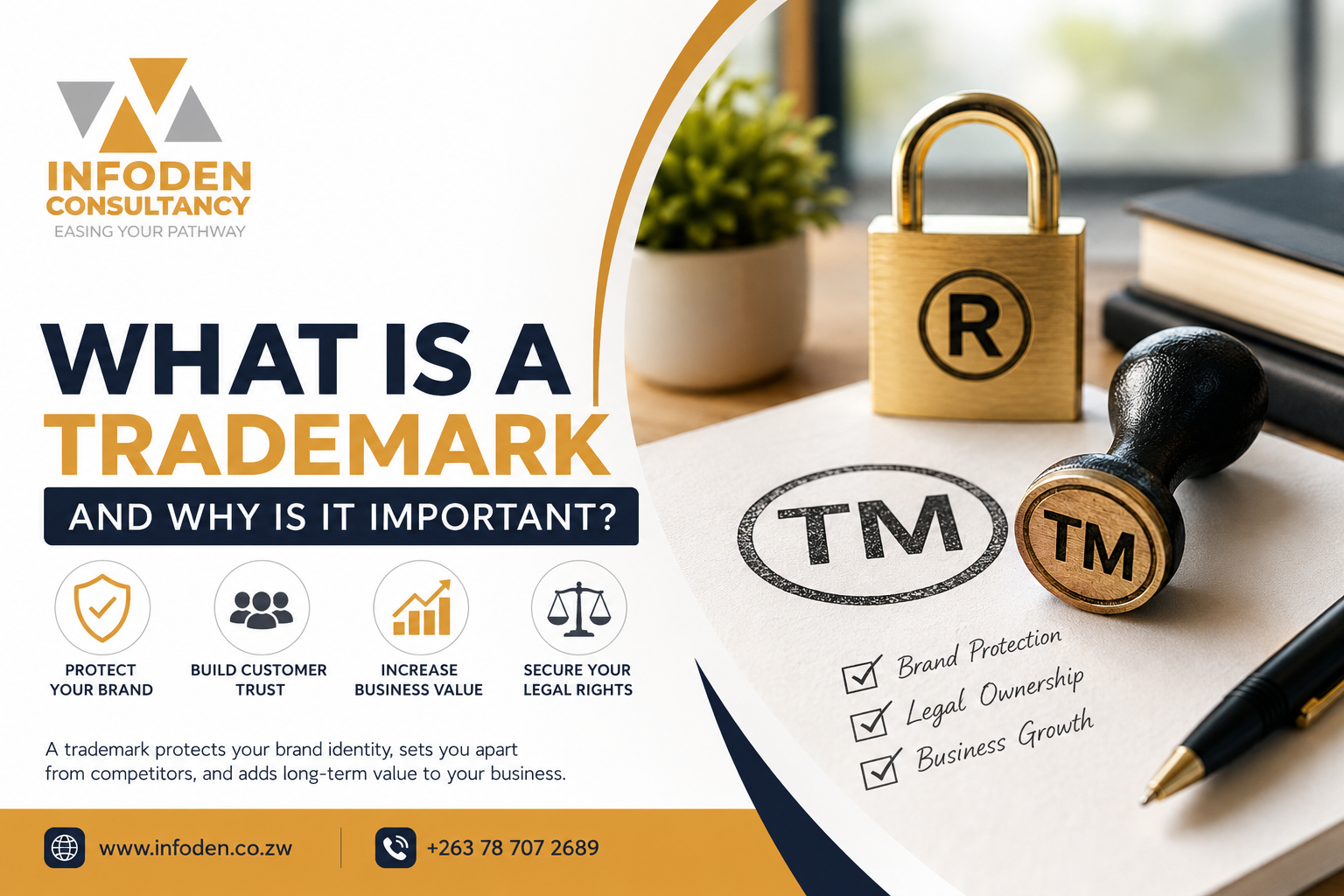
What Is a Trademark and Why Is It Important for Your Business?
A single missed registration could cost you years of hard work.
Imagine spending years building a business. You've invested in your products, created a memorable logo, printed thousands of business cards, built a website, gained loyal customers, and finally established a reputation people trust.
Then one day, you receive a legal notice informing you that another business owns the rights to the name you've been using. You're forced to stop using it immediately.
Suddenly, every signboard, social media page, product label, marketing campaign, and customer relationship you've built around that name is at risk.
It happens more often than many business owners realise.
A trademark isn't just a legal document. It's one of the most valuable business assets you can own. Whether you're launching a startup, opening a retail shop, manufacturing products, or expanding internationally, protecting your brand should be part of your business strategy from the very beginning.
This guide explains what trademarks are, why they matter, how they work, and what every business owner should know before someone else claims their brand.
Primary Keyword
What is a trademark?
Secondary Keywords
Importance of trademarks
Brand protection
Trademark law
Business branding
Trademark application
Registering a trademark
Search Intent
Informational with commercial intent. Readers want to understand trademarks and determine whether they should register one.
What Is a Trademark?
A trademark is a legally protected sign that distinguishes the goods or services of one business from those of another.
A trademark can be:
A business name
A brand name
A logo
A slogan
A symbol
A combination of colours
A unique product shape
In some cases, even sounds or packaging designs
Simply put, a trademark tells customers:
"This product or service comes from this particular business."
Think about brands you instantly recognise from their logo, colour scheme, or slogan. Those recognisable features are often protected by trademarks.
Why Are Trademarks Important?
Many entrepreneurs believe that registering a company automatically protects their brand.
It doesn't.
Registering a company gives you the legal existence of a business entity. It does not automatically give you exclusive rights to use a brand name as a trademark.
Trademark registration serves a completely different purpose.
It Protects Your Brand Identity
Your brand is more than a name.
It's your reputation.
It's the trust customers place in your products.
It's what separates you from competitors.
Without trademark protection, another business could use a similar name or logo, confusing customers and weakening your reputation.
It Gives You Exclusive Rights
Once properly registered, a trademark generally gives its owner exclusive rights to use that mark in connection with the goods or services for which it is registered.
This means you are in a much stronger position to stop others from using confusingly similar branding.
It Builds Customer Trust
Customers buy from brands they recognise.
When your trademark becomes associated with quality, people are more likely to return and recommend your business to others.
Consistency creates confidence.
It Adds Value to Your Business
Many business owners overlook this.
A trademark is intellectual property.
Like land or equipment, it has value.
As your business grows, your trademark can become one of your most valuable assets.
It can be:
Licensed
Sold
Franchised
Used during investment negotiations
Included in business valuations
Well-known brands are often worth millions because of the strength of their trademarks.
It Supports Business Expansion
Planning to expand into new cities or countries?
Your trademark becomes even more important.
Without protection, someone else may register your brand before you enter a new market.
Recovering your rights afterwards can be difficult and expensive.
What Can Be Trademarked?
Many people assume only logos qualify.
In reality, many types of identifiers may qualify for trademark protection if they meet legal requirements.
Examples include:
Business Names
The name customers associate with your products or services.
Logos
Distinctive visual designs representing your business.
Product Names
Individual product brands.
Service Brands
Names used for professional services.
Slogans
Short memorable phrases associated with a business.
Packaging
Unique packaging that customers instantly recognise.
What Cannot Usually Be Trademarked?
Not every word or design qualifies.
Generally, trademarks cannot consist solely of:
Generic names
Descriptive words without acquired distinctiveness
Offensive material
Marks that are likely to confuse consumers
Marks that closely resemble existing registered trademarks
Each application is assessed on its own facts and the applicable legal requirements.
How Does Trademark Registration Work?
Although procedures vary by country, the process generally follows these steps.
Step 1: Conduct a Trademark Search
Before filing an application, search existing trademarks.
This helps determine whether a similar trademark already exists.
Skipping this step can result in wasted time and unnecessary costs.
Step 2: Choose the Correct Classes
Trademarks are registered under specific classes of goods and services.
Selecting the correct classes is essential because protection is generally limited to the classes applied for and approved.
Step 3: File the Application
The application usually includes:
Applicant details
The trademark
Goods or services
Relevant classifications
Required supporting documentation
Step 4: Examination
The relevant intellectual property office examines the application to determine whether it meets legal requirements.
If objections arise, they may need to be addressed before registration proceeds.
Step 5: Registration
If the application is successful and all requirements are met, the trademark is registered and the owner receives legal protection for the approved goods and services.
Real Business Example
Suppose a Harare entrepreneur launches a bottled water brand called "Crystal Springs."
The business grows rapidly.
Three years later, another company registers a similar trademark before the original owner secures protection.
The original business may face legal disputes, expensive rebranding, and loss of customer recognition.
Now imagine the opposite.
The entrepreneur registers the trademark early.
If another company later adopts a confusingly similar brand, the trademark owner is in a much stronger legal position to enforce their rights.
The cost of early protection is often far lower than the cost of resolving disputes later.
Common Misconceptions About Trademarks
"I registered my company, so my name is protected."
Not necessarily.
Company registration and trademark registration are separate legal processes.
"I've been using the name for years."
Long-term use can sometimes create rights, depending on the jurisdiction and circumstances, but formal registration generally provides stronger and clearer protection.
"Only large companies need trademarks."
Small businesses often have the most to lose because they may lack the resources to recover from costly branding disputes.
"My logo is enough."
Sometimes the name should also be protected.
Depending on your business, it may be appropriate to protect both the word mark and the logo.
Common Mistakes People Make
1. Waiting Too Long
Businesses often register trademarks only after becoming successful.
Unfortunately, someone else may have already claimed similar rights.
Avoid it: Apply as early as reasonably possible.
2. Skipping Trademark Searches
Assuming a name is available without checking existing records can lead to rejected applications or disputes.
Avoid it: Conduct a thorough trademark search before investing in branding.
3. Choosing Weak Brand Names
Descriptive names are generally harder to protect than distinctive ones.
Avoid it: Select a unique, memorable brand from the outset.
4. Ignoring International Markets
Businesses increasingly sell online across borders.
Trademark protection in one country does not automatically extend worldwide.
Avoid it: Consider protection in markets where you intend to trade.
5. Failing to Monitor Your Trademark
Registration is not the end of the process.
Businesses should monitor the marketplace for potentially infringing uses.
Avoid it: Periodically review competitors and seek advice if confusingly similar branding appears.
Expert Perspective
Over the past decade, businesses have become far more digital.
Customers often discover brands through search engines, social media, online marketplaces, and e-commerce platforms before ever visiting a physical location.
That shift has made trademarks more valuable than ever.
A distinctive brand improves recognition, strengthens marketing, supports customer loyalty, and increases the overall value of a business.
From a regulatory standpoint, businesses should ensure that their branding strategy aligns with intellectual property laws and commercial objectives. A proactive approach to trademark protection is usually more effective—and less expensive—than resolving disputes after they arise.
Business owners should think of trademarks not as a legal formality, but as a strategic investment that protects years of effort and supports future growth.
Conclusion
A trademark is much more than a name or logo.
It protects your identity, your reputation, your marketing investment, and your future growth.
Whether you're starting your first business or expanding an established one, protecting your brand early can save significant time, money, and stress later.
Businesses that understand the value of intellectual property are often better positioned to attract customers, secure partnerships, and build lasting brands.
If your business depends on its name, logo, or reputation, your trademark deserves careful attention.
Need Help Protecting Your Brand?
At Infoden Consultancy, we assist entrepreneurs, startups, and established businesses with intellectual property guidance as part of a broader business compliance and growth strategy.
Whether you're registering a new business, strengthening your legal foundations, or seeking advice on protecting your brand, our team can help you understand the process and connect you with the appropriate solutions.
Protecting your brand today can help preserve the value you've worked hard to build tomorrow.
Frequently Asked Questions
1. What is a trademark?
A trademark is a legally recognised sign, such as a name, logo, slogan, or symbol, that distinguishes one business's goods or services from another's.
2. Why is a trademark important?
It protects your brand identity, helps prevent customer confusion, strengthens your legal position, and adds value to your business.
3. Is company registration the same as trademark registration?
No. Company registration creates a legal business entity, while trademark registration protects your brand.
4. Can I trademark my business name?
Yes, provided it meets the legal requirements and does not conflict with existing rights.
5. Can I trademark my logo?
Yes. Logos are among the most commonly registered trademarks.
6. How long does trademark protection last?
This depends on the laws of the country where the trademark is registered. In many jurisdictions, protection can be renewed indefinitely, provided renewal requirements are met.
7. Can two businesses have similar trademarks?
Sometimes, if they operate in different industries or there is no likelihood of consumer confusion. Each case depends on the applicable law and circumstances.
8. Should startups register trademarks?
Yes. Early registration can help avoid costly disputes and protect future growth.
9. What happens if someone copies my trademark?
Depending on the circumstances and applicable law, you may have legal remedies to enforce your rights.
10. Can trademarks be sold?
Yes. Trademarks are intellectual property assets that can generally be sold, licensed, or transferred.
11. Does a trademark protect my product idea?
No. Trademarks protect branding, not inventions or ideas. Other forms of intellectual property, such as patents, may be relevant for inventions.
12. Do I need professional assistance to register a trademark?
While some businesses file applications themselves, professional guidance can help reduce errors, improve the quality of the application, and address legal issues that may arise.
Action Checklist
☐ Choose a distinctive business or brand name.
☐ Conduct a trademark availability search before investing in branding.
☐ Register your company separately from your trademark.
☐ Identify the correct classes for your goods or services.
☐ Register both your business name and logo where appropriate.
☐ Keep records showing how you use your trademark.
☐ Monitor the market for similar brands.
☐ Renew your trademark on time where required.
☐ Consider international protection if you plan to expand.
☐ Seek professional advice before launching a major new brand.
Suggested Internal Links
Company Registration Services
Business Name Registration Guide
Intellectual Property Services
Tax Registration for New Businesses
Business Compliance Checklist
How to Start a Business in Zimbabwe
Funding Readiness for SMEs
Business Consultancy Services
Supplier Registration Services
Strategic Business Growth Consulting
Suggested Social Media Post
Your business name could be one of your most valuable assets—but is it protected?
Many entrepreneurs assume that registering a company automatically protects their brand. It doesn't.
Our latest guide explains what a trademark is, why it matters, common mistakes businesses make, and how protecting your brand can save you from costly disputes in the future.
If you've invested time and money into building your reputation, this is essential reading.
Read the full article and learn how to protect the brand you've worked so hard to build.
#Trademark #BusinessGrowth #BrandProtection #IntellectualProperty #Entrepreneurship #ZimbabweBusiness #SMEs #InfodenConsultancy
Frequently Asked Questions
1. What is a trademark?
A trademark is a legally recognised sign, such as a name, logo, slogan, or symbol, that distinguishes one business's goods or services from another's.
2. Why is a trademark important?
It protects your brand identity, helps prevent customer confusion, strengthens your legal position, and adds value to your business.
3. Is company registration the same as trademark registration?
No. Company registration creates a legal business entity, while trademark registration protects your brand.
4. Can I trademark my business name?
Yes, provided it meets the legal requirements and does not conflict with existing rights.
5. Can I trademark my logo?
Yes. Logos are among the most commonly registered trademarks.